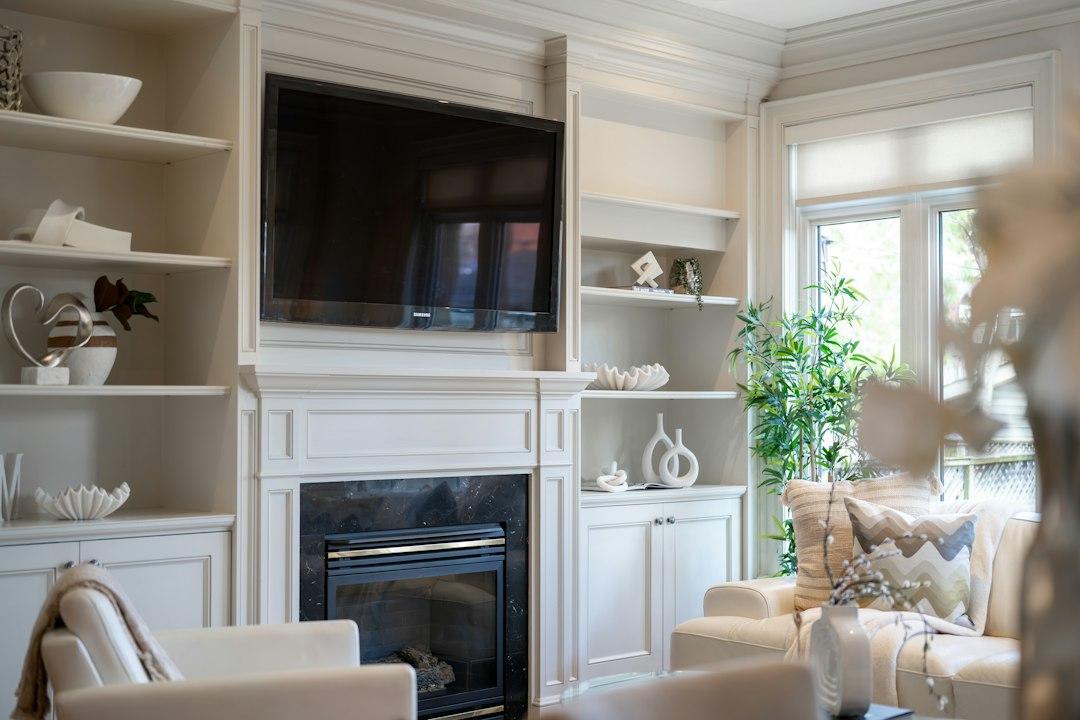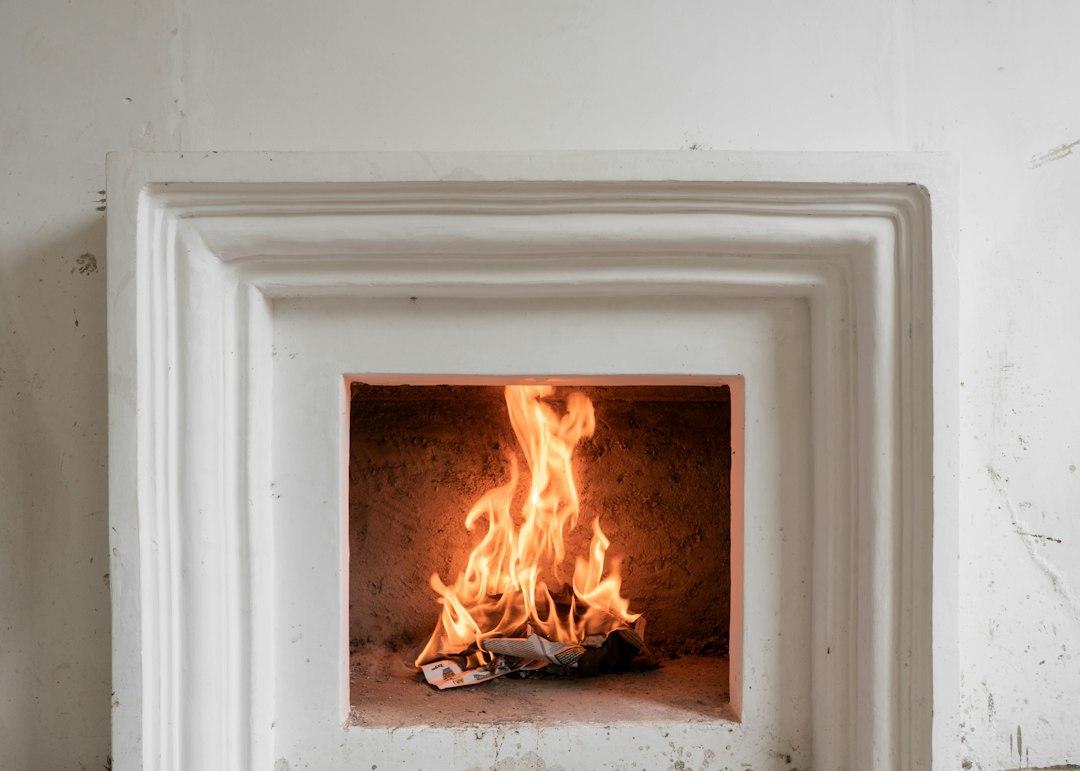
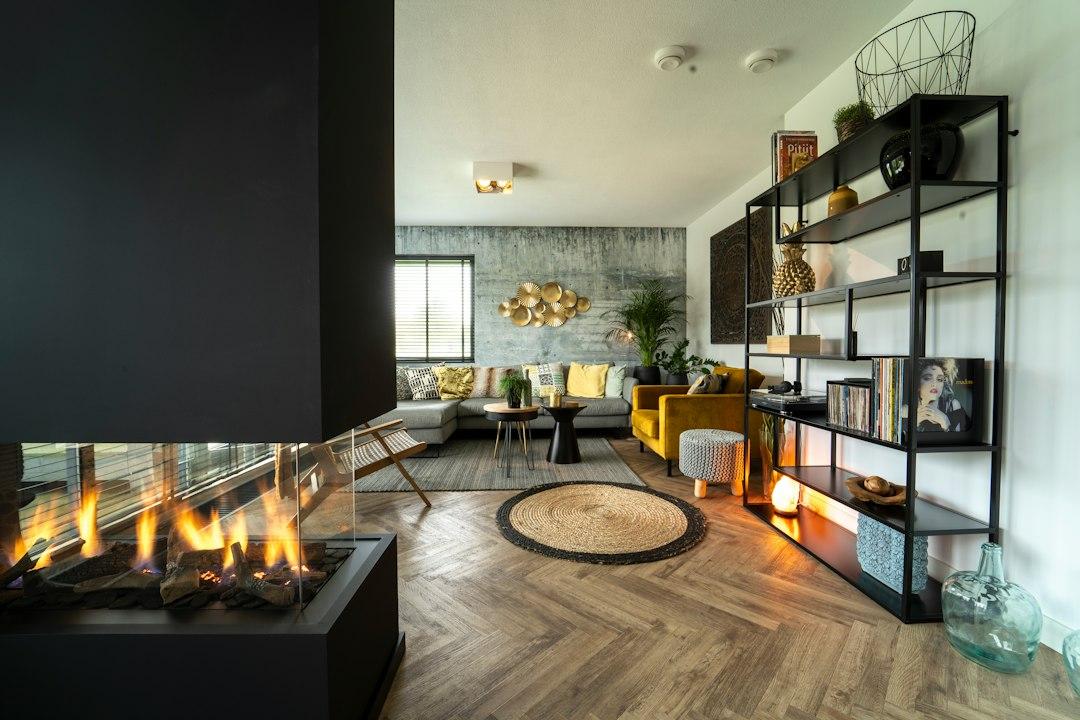
Owners in Whittier who want a gas fire usually arrive with one of two pictures in mind. One is a set of ceramic logs sitting in the old brick firebox, flames dancing, the room looking the way it always has. The other is a steel box with a glass front that throws real heat into the room. Both burn gas. They are different purchases, and choosing between them is mostly about what you want the fireplace to do on a cold night.
The short comparison
| Gas log set | Gas insert | |
|---|---|---|
| Main job | Looks | Heat |
| Sits in | The open firebox | A sealed box inside the firebox |
| Damper | Stays open while lit (vented sets) | Liner replaces the old flue path |
| Glass front | Optional screen or doors | Fixed glass |
| Heat into the room | Small | Large |
| Our published price | Priced per set after a visit | $2,650 to $5,300 installed |
What a log set really is
A log set is a burner pan, a valve and a stack of shaped logs, placed in the firebox you already have. Vented sets send their combustion gases up the chimney, which means the damper stays open whenever the logs burn. That open damper is also where most of the heat goes, so a vented set looks lovely and does little for the room's temperature.
Vent-free sets do keep heat in the room, but they also keep their exhaust and moisture in the room. They come with limits on room size and are not allowed everywhere, and many owners simply do not like the idea of breathing what the flame produces. We talk through both kinds on the visit and fit the set that suits the room and the firebox. Our gas logs page covers the range we install.
What an insert really is
An insert is a closed firebox that slides into your existing opening. It draws air for the flame from outside and sends exhaust out through a liner that runs to the top of the chimney. The room air never mixes with the fire. A fan behind the face pushes warm air back out into the room. In a typical Whittier living room, that turns a fireplace that used to cool the house into one that can carry a room through an evening.
The trade is looks. An insert has a steel surround and a glass face, so the old brick opening is partly covered. Many modern units have good flame pictures and log sets inside the box, but they are not the same as an open hearth.
Where the costs differ
A log set is the cheaper path to a gas flame. The set itself, the valve and a gas line already at the hearth make up most of the job. We price sets once we have measured the firebox and seen the flue, because the right size depends on the opening and the depth.
An insert costs more: the unit, a liner the full height of the chimney, a cap that fits the liner, and the trim to close the gap around the face. On this site that whole package sits at $2,650 to $5,300 installed. The low end is a compact unit on a single storey house with gas at the hearth already. The upper end is a larger unit, a long liner, or a premium face.
If the firebox has no gas yet, running a line to it is extra for either option. The distance from the nearest supply and what has to be opened up between the two decide that part.
What decides which one suits your house
- How often you use the fireplace. A few evenings a year, for company and the holidays: a log set may be all you need. Most weeknights from November to March: an insert pays for itself in comfort.
- The state of the flue. A cracked or gappy old clay flue can be a problem for a vented log set, because the exhaust travels through it. An insert brings its own liner, so the old flue only carries the liner.
- The look you want to keep. A tall brick opening with a carved mantel may be the reason you bought the house. A log set leaves it as it is.
- Air in the room. Smaller rooms and tight modern windows push us toward vented options or an insert rather than vent-free logs.
If you are still torn, ask for a gas visit and note which room the fireplace is in, roughly how big it is and whether a gas key already sits by the hearth. We come out, measure the firebox, look at the flue and send back written figures for both options so you can set them side by side.
When neither is right
Some fireplaces in older Whittier homes have a firebox that is too shallow for any insert we would recommend, or a chimney that needs serious work before it should carry anything. In those cases we say so plainly. Sometimes the answer is a log set now and repairs later; sometimes it is a direct vent unit through an outside wall instead, priced at $4,250 to $8,550 on this site, which leaves the old chimney out of the picture altogether.
A word on service
Both log sets and inserts want a yearly look. A log set needs its burner ports clear and its logs in the right places, or the flame turns yellow and sooty. An insert needs its glass, its pilot and its vent cap checked. We fold those into one visit on our gas fireplace cleaning round.
If an insert is where you are leaning, Whittier Insert Costs Compared puts gas next to wood and pellet.
Ready to choose? Head to our contact page and let us know which picture you started with; we bring the measuring tape and the price sheet.
Planning an Upgrade of Your Own?
Thayer measures the opening, looks up the flue and puts wood, gas and pellet units side by side with their installed prices. We work from Whittier across Pico Rivera, La Habra, La Habra Heights, West Covina and the cities around them.